A first visit to a laundromat raises a fair question: the machines look like bigger versions of the one at home, so what does the size actually buy you? The honest answer has two parts, and only the first is capacity. Yes, a commercial washer holds several home loads at once. But the less visible difference matters as much: commercial machines extract far more water in the spin cycle, which is why a load washed at the laundromat dries in a fraction of the usual time.
Walk through a first big-load visit at a place like Forest City Coin Laundry and the differences explain themselves in order.
- Judge capacity by tumble room, not by the label. Machine sizes are rated by weight, but the working rule is a drum filled about two-thirds to three-quarters full, loosely. Commercial drums scale from roughly double a home load up to several loads in the largest machines, which is the difference between washing a comforter and wrestling one.
- Load loosely and distribute the weight. Big machines forgive a lot, but a single dense clump of wet towels thrown to one side will unbalance any drum. Spread items around, mix large and small pieces, and never wind a sheet or comforter into a rope before loading.
- Add a measured dose, not a home pour. Commercial machines are high-efficiency and use less water per pound of laundry than an old home top-loader. The detergent dose that felt normal at home is an overdose here, and residue is the tax.
- Pick the cycle by soil, not by habit. Everyday loads run on normal. The heavy or extra-soil settings earn their keep on work clothes, sports gear, and anything carrying clay or grease. Longer is not cleaner for a load of lightly worn office clothes.
- Listen for the extract spin. This is the signature difference. Commercial washers spin at much higher speeds, measured as g-force, flinging out water a home spin leaves behind. Clothes come out damp rather than wet, sometimes surprisingly close to dry on synthetics.
- Move to the dryer and cut your expectation. Because the load arrives with less water in it, dryer time drops substantially compared with the same load at home. Start with less time than habit suggests and check, rather than baking elastic and prints with a full home-length cycle.
- Fold at the table and feel the difference. High extraction also means fewer wrinkles set during a long wet sit, and bulky items like towels and blankets come out loftier. This is the step where most first-timers get converted.
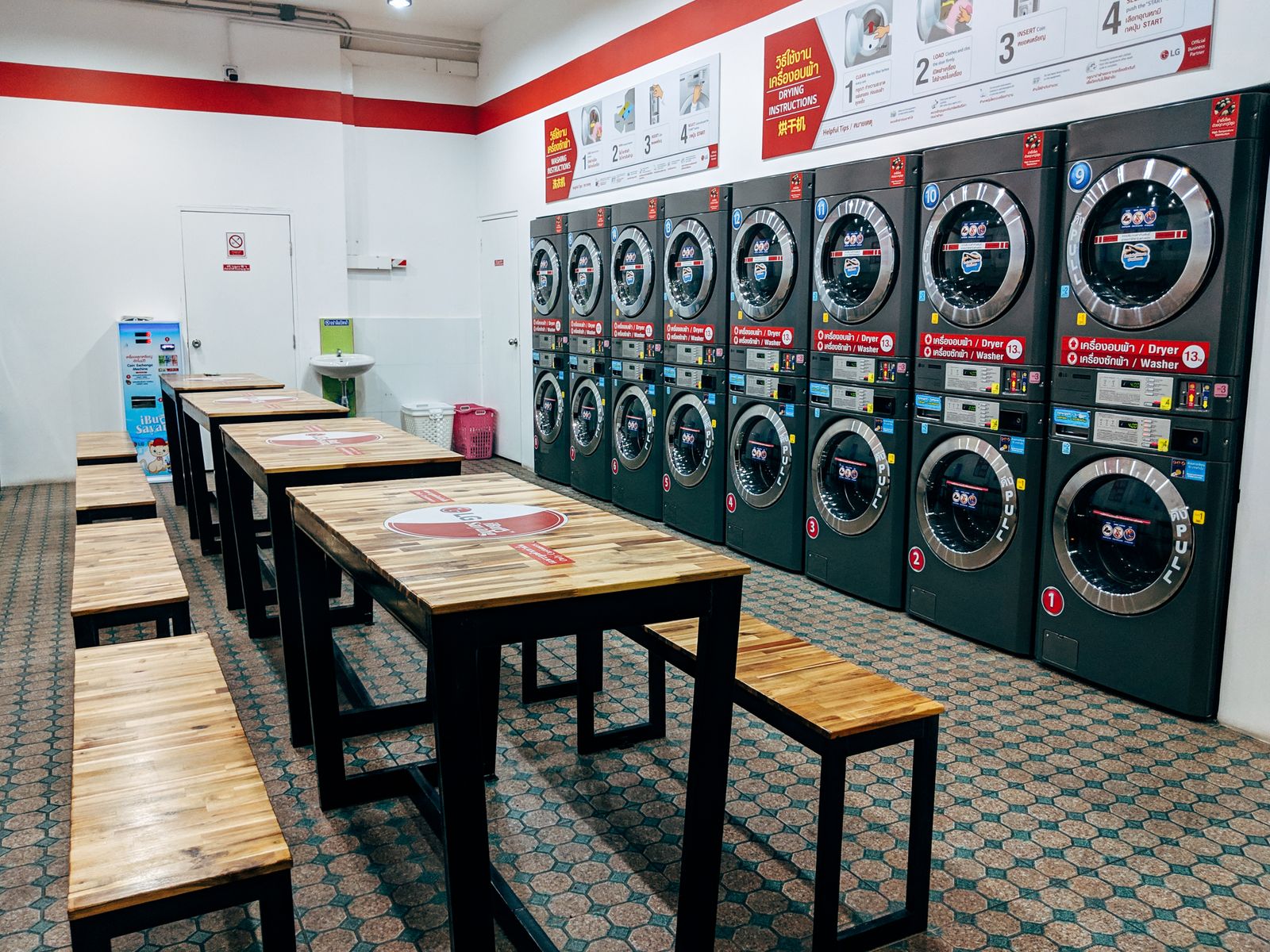
Which loads argue for the trip
Not every load needs commercial machines, and honesty about that is part of the picture. A weekly load of clothes for one person washes fine at home. The loads that argue for the laundromat are the ones where capacity or extraction changes the outcome: comforters and bedding that need tumble room, a household's entire week done in parallel instead of in sequence, rugs and pet blankets you would rather not run through your own machine, and anything so heavily soiled that a long commercial cycle is the right tool. Time is the third argument. Four loads in four machines finish in the time one home load takes, and they come out drier.
A note on care
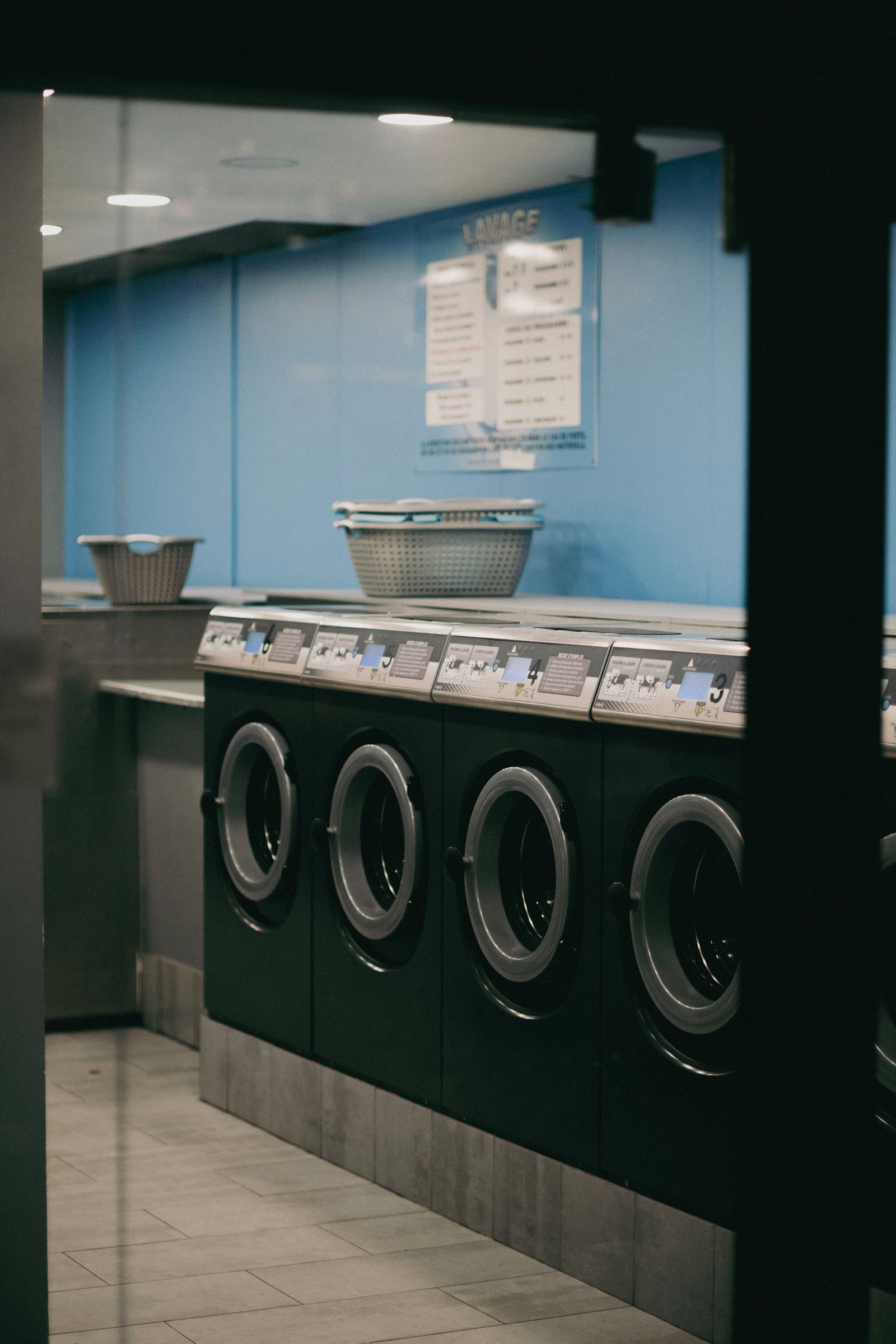
Bigger machines do not mean rougher treatment by default. Front-load commercial washers clean by tumbling, with no central agitator, which is gentler on fabric than the home top-loaders many people are used to. The risks are the ones you control: overloading, overdosing detergent, and over-drying. Keep those three in line and a commercial machine treats a load as well as or better than the one at home, while finishing it sooner. That combination, capacity, extraction, and gentleness in a single cycle, is the whole case for the trip, and it is why regulars rarely go back to waiting on a home machine for the big weekly loads.
Common questions
How many home loads fit in the biggest machines?
Depending on the machine, the largest commercial washers handle roughly three to four typical home loads at once, provided the drum stays loose enough for the load to tumble and rinse properly.
Why does laundromat laundry dry so much faster?
Extraction. Commercial spin cycles remove significantly more water than a home washer's spin, so the dryer starts with a damp load instead of a wet one and finishes sooner.
Are commercial machines harder on clothes?
No. Front-load tumbling without an agitator is generally gentler than a home top-loader. Damage usually comes from overloading, too much detergent, or excessive dryer heat, all of which are in your control.
Photos in this guide are representative stock images.
← All guides from Forest City Coin Laundry← Back to Forest City Coin Laundry